


Supplements for high-intensity training are scientifically backed tools that improve performance, delay fatigue, and accelerate recovery when used judiciously. Caffeine, creatine monohydrate, and carbohydrates are the three pillars with the most evidence for demanding sessions. Understanding their mechanisms, correct dosages, and optimal intake timing makes the difference between a mediocre workout and one that brings you closer to your goals. This guide explains exactly what to take, when, and how to combine them to get the most out of your effort.
What are the most effective supplements for high-intensity workouts?
Supplementation for intense training is divided into two categories: supplements with solid evidence and supplements with specific uses. Knowing the difference saves you money and protects you from unnecessary adverse effects.
Caffeine
Caffeine is the most scientifically supported pre-workout supplement available. Taken at doses of 3 to 6 mg/kg of body weight, it improves high-intensity performance by 2 to 7%. For a 70 kg person, this is equivalent to between 210 and 420 mg per dose. Its mechanism is direct: it blocks adenosine receptors in the brain, reducing the perception of effort and delaying the onset of mental and physical fatigue.
Creatine Monohydrate
Creatine monohydrate is the most evidence-backed supplement for increasing high-intensity capacity and lean muscle mass. The recommended dose is 3 to 5 g daily. Its effectiveness does not depend on taking it just before training, but on maintaining saturated muscle stores consistently. This makes it a daily habit supplement, not one with precise timing.
Intra-workout Carbohydrates
Carbohydrates are the main fuel for high-intensity efforts. During sessions longer than 60 minutes, providing between 30 and 60 g of carbohydrates per hour helps maintain blood glucose levels and delay muscle glycogen depletion. Sports gels, drinks with maltodextrin, or bananas are practical and well-tolerated options.
Beta-alanine and Sodium Bicarbonate
These two compounds act as lactic acid buffers in repeated and intense efforts. Beta-alanine increases muscle carnosine levels, improving lactate tolerance. Sodium bicarbonate can delay fatigue due to acidosis, although its use is limited by individual gastrointestinal tolerance. They are not supplements for general use, but for athletes with very specific and high-demand sessions.
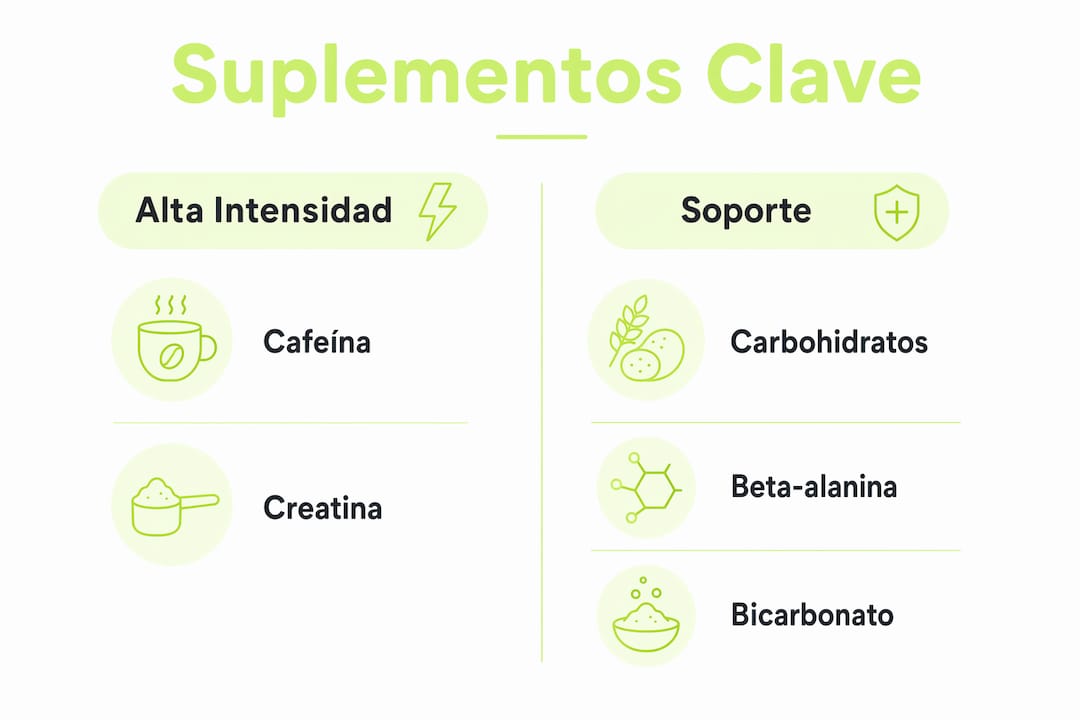
Professional tip: Before adding beta-alanine or bicarbonate to your protocol, try caffeine and creatine first for at least four weeks. They offer the greatest return with the lowest risk.
How and when to take supplements to optimize the load in intense workouts?
The timing of supplementation is not a minor detail. Taking supplements at the wrong time can reduce their effectiveness or cause discomfort that ruins your session.
-
Caffeine: 45 to 60 minutes before. Dose and timing adjustment should be done through prior testing to maximize benefits and minimize side effects, especially due to genetic and sex variability. Start with 2 mg/kg and gradually increase. Avoid taking it after 2 PM if you train in the afternoon, as its 5 to 6-hour half-life can interfere with sleep.
-
Creatine: any time of day, consistently. Muscle saturation of creatine is more important than synchronization with training. Take it at the same time each day to build the habit. If you want to saturate faster, you can do a loading phase of 20 g daily divided into four doses for five to seven days, followed by 3 to 5 g for maintenance.
-
Carbohydrates: before and during long sessions. For workouts longer than 60 minutes, consume a fast-digesting carbohydrate source 30 minutes before and continue to provide 30 to 60 g per hour during the session. For short, intense sessions, pre-workout snacks have less impact on performance.
-
Hydration: before, during, and after. Drink 500 to 600 ml of water in the two hours before training and between 150 and 250 ml every 15 to 20 minutes during the session. If exercise exceeds 60 minutes or there is heavy sweating, add electrolytes to replenish sodium and potassium.
-
Protein: for recovery, not performance. Protein is more relevant for recovery than for immediate performance. Take between 20 and 40 g of high-quality protein within 30 to 60 minutes after training to promote muscle synthesis.
Professional tip: If you combine caffeine and creatine on the same day, there is no interference between them. You can take them together or separately according to your routine.
What common mistakes should you avoid when supplementing for intense workouts?
Most mistakes in nutrition for high load don't come from choosing the wrong supplement, but from using them incorrectly or in the wrong context.
-
Obsessing over protein and neglecting energy. Without sufficient energy intake in the form of carbohydrates and fats, the body oxidizes protein as an energy source. This not only wastes the most expensive supplement but also compromises recovery and performance.
-
Using high doses without prior experience. Taking 400 mg of caffeine on the first day, or 20 g of creatine without an adaptation phase, can cause anxiety, tachycardia, or gastrointestinal discomfort. Always start with the minimum effective dose and adjust according to your response.
-
Not testing supplements before competing or in key sessions. Introducing a new gel, sports drink, or pre-workout on the day of an important event is a classic mistake. Always test them in less demanding workouts first.
-
Believing that supplements compensate for a bad diet. Strategies that promise performance without a solid nutritional foundation have no scientific backing. Supplements are a complement, not a substitute for a balanced diet.
-
Taking caffeine too late. If you train at 7 PM and take caffeine at 6:30 PM, you will likely have trouble sleeping. Sleep is where most muscle recovery occurs. Sacrificing it for extra energy in training is a trade-off that doesn't pay off.
"The most effective supplement for performance is the one used correctly, at the right time, and on a solid nutritional foundation."
Comparison of supplements by training type and objective
Not all supplements are equally useful for all types of sessions. This table helps you prioritize based on your usual training.
| Supplement | HIIT / Explosive | Strength / Hypertrophy | Endurance / >60 min | Main Goal |
|---|---|---|---|---|
| Caffeine | ✓✓ Very useful | ✓ Useful | ✓✓ Very useful | Energy and motivation |
| Creatine Monohydrate | ✓✓ Very useful | ✓✓ Very useful | ✓ Moderate | Strength and power |
| Intra-workout Carbohydrates | ✓ Moderate | ✗ Not very necessary | ✓✓ Very useful | Sustained fuel |
| Beta-alanine | ✓✓ Very useful | ✓ Useful | ✓ Moderate | Lactate tolerance |
| Sodium Bicarbonate | ✓ Specific | ✗ Not very necessary | ✓ Specific | Acidosis in short efforts |
| Vitamin D and Omega-3 | ✓ Base support | ✓ Base support | ✓ Base support | Muscle and hormonal function |
For HIIT sessions or explosive strength training, the combination of caffeine plus creatine is the most evidence-backed. For long endurance sessions, add intra-workout carbohydrates and electrolytes. If you have detected deficiencies in analytics, supplements such as vitamin D, iron, or magnesium can make a real difference in your overall performance. Tres60's TriMagnesio is an option specifically formulated to support muscle and energy function in athletes with high physical demands.
Key points
The most evidence-backed supplements for high-intensity training are caffeine, creatine monohydrate, and carbohydrates, and their effectiveness directly depends on the correct dosage, appropriate timing, and a solid nutritional foundation.
| Point | Details |
|---|---|
| Caffeine: dose and timing | Take between 3 and 6 mg/kg of body weight 45 to 60 minutes before training. |
| Creatine: daily consistency | Muscle saturation depends on daily habit, not the exact time of intake. |
| Intra-workout carbohydrates | Provide between 30 and 60 g per hour in sessions exceeding 60 minutes. |
| Avoid common mistakes | Don't neglect carbohydrates for protein and always test supplements before key sessions. |
| Mandatory personalization | Adjust doses and combinations according to your individual tolerance, training type, and goals. |
What I've learned after years advising on high-intensity supplementation
The most dangerous trend I see in active athletes is over-supplementation. They arrive with stacks of eight or ten different supplements, spending over 200 euros a month, when in reality two or three well-chosen products would do the job. The industry sells complexity because complexity sells. The evidence, however, is surprisingly simple.
What really works, and what we see reflected in those who follow our protocols at Tres60, is consistency with the basics. Creatine every day. Caffeine adjusted to weight and schedule. Carbohydrates when the session requires it. Protein for recovery. Hydration always. That's 90% of the result.
The other 10% comes from personalization. Genetics influence how you metabolize caffeine. Your stress level affects how much magnesium you need. Your usual diet determines whether vitamin D or iron are relevant to you. That's why at Tres60 we insist on personalized nutritional advice before recommending any product. A supplement without context is just an expense.
My practical recommendation: start with creatine and caffeine for four weeks. Measure your performance. Then add what's missing based on your results and training type. Not the other way around.
— tres60
Improve your performance with doctor-formulated supplements
If you are looking for high-quality, medically formulated supplements for intense training, you will find exactly that at Tres60. Our catalog includes products designed to meet the real needs of active athletes, from cellular energy to post-workout recovery.
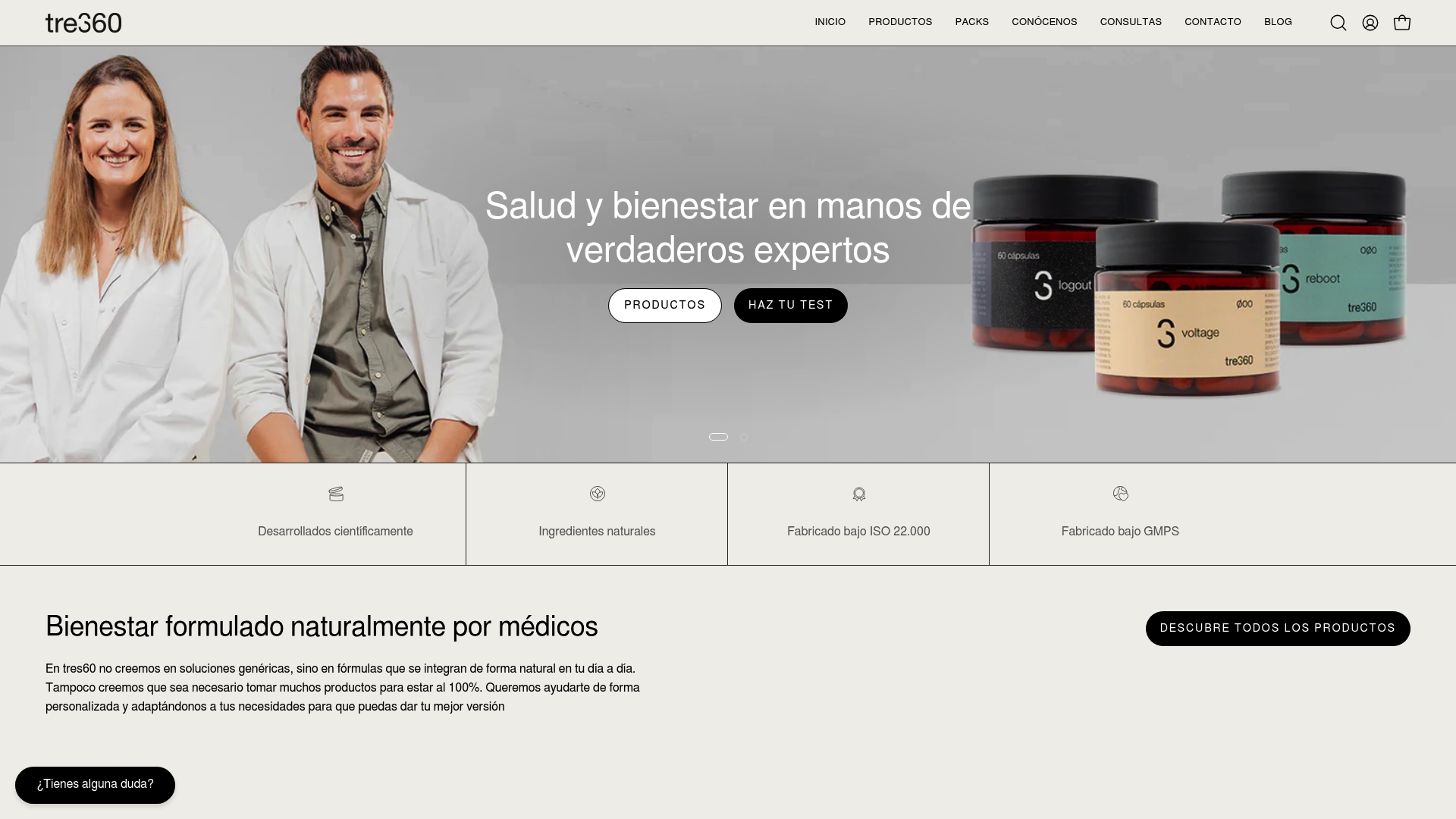
VOLTAGE is formulated to maintain cellular energy and cognitive function during demanding sessions. REBOOT supports recovery and protects against oxidative stress generated by high loads. Both are evidence-backed and formulated with medical discretion. Explore our complete catalog, and if you have questions about which protocol best suits you, our personalized nutritional advice team is available to guide you.
FAQ
Which supplement most improves high-intensity performance?
Caffeine and creatine monohydrate are the supplements with the most evidence for improving performance in high-intensity workouts. Caffeine acts acutely in each session, while creatine generates cumulative adaptations with consistent daily use.
When should I take creatine to make it most effective?
Creatine can be taken at any time of the day, as its effectiveness depends on accumulated muscle saturation and not on the exact timing relative to training. The most important thing is to take it every day without exception.
Are carbohydrates necessary in all workouts?
No. In sessions lasting less than 60 minutes, intra-workout carbohydrate intake has limited impact on performance. They are especially useful in long or sustained high-intensity sessions where muscle glycogen can be depleted.
Can I combine caffeine and creatine without problems?
Yes. There is no interference between caffeine and creatine when taken together. You can include both in your daily protocol without worrying about negative interactions between them.
Do supplements work if my diet isn't good?
Not significantly. Supplements complement a solid nutritional foundation, but do not replace it. Without sufficient energy from carbohydrates and fats, even the best supplements offer very limited results.


